
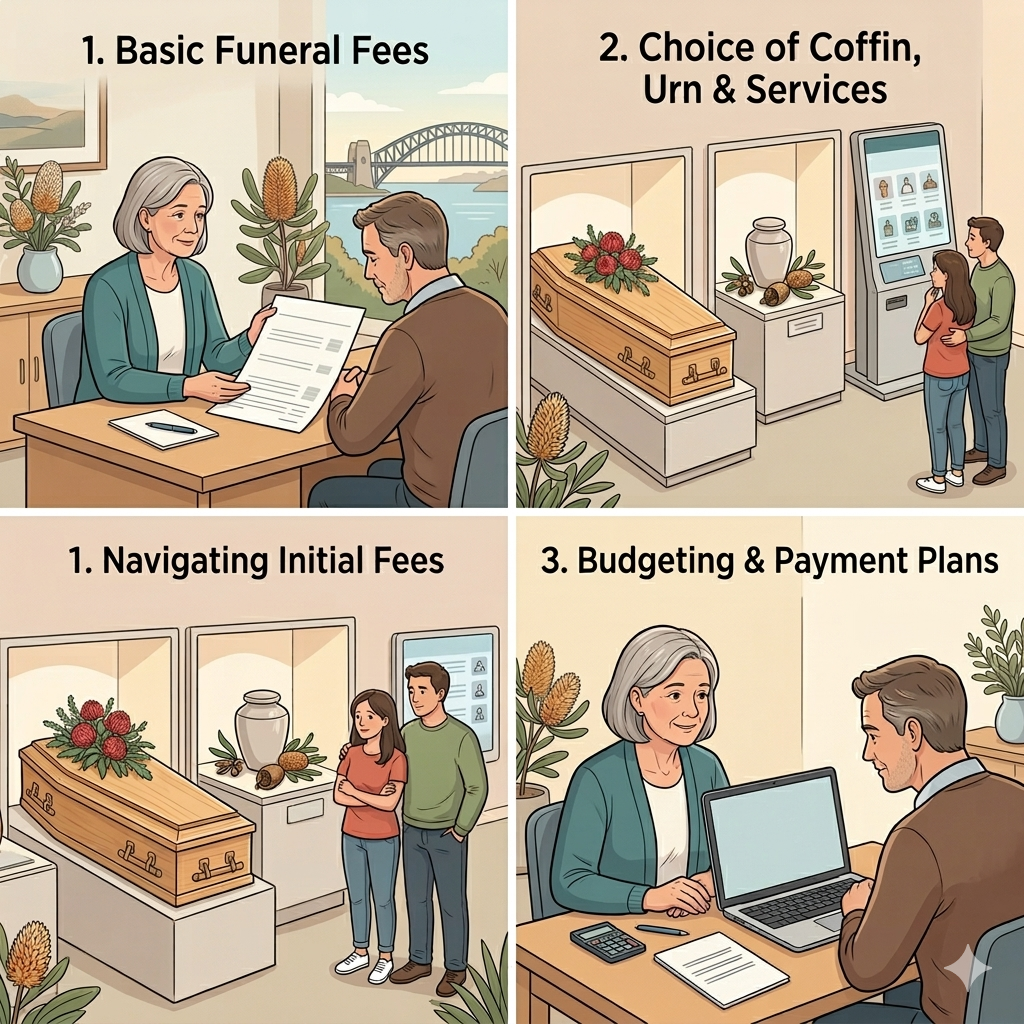
Funeral costs are one of the first practical concerns many families face after a death. While funerals are often arranged with care and personal meaning, they can also involve a range of expenses that are not always obvious at the beginning.
In Australia, funeral costs can vary widely depending on the type of service, location, and the choices made by the family. Understanding the typical price ranges and the options available can help families make informed decisions during a difficult time.
This guide explains the average cost of a funeral in Australia, the differences between burial and cremation, common expenses people may not expect, and some ways families can manage funeral costs.
The average funeral cost in Australia
The cost of a funeral in Australia can range significantly depending on the type of service and the level of involvement from funeral providers. A traditional funeral with a burial is generally the most expensive option. These services often involve a formal ceremony, burial plot, coffin, transport, and cemetery fees. On average, a burial funeral in Australia can cost between $8,000 and $15,000, although costs may be higher in major cities where cemetery land is limited.
Cremation services are typically less expensive. Many cremation funerals fall between $4,000 and $8,000, depending on the service style and additional arrangements. Some families choose a very simple cremation without a formal service. Often referred to as direct cremation, this option may cost between $2,000 and $4,000, although prices can vary between providers.
Location can also influence funeral pricing. Costs in large metropolitan areas such as Sydney, Melbourne and Brisbane are often higher than in regional areas due to venue fees, cemetery costs and operating expenses. Because of these differences, families often benefit from comparing local providers to understand the services and pricing available in their area.
Burial versus cremation costs
One of the biggest decisions affecting funeral costs is whether a burial or cremation is chosen.
Burial funerals
Burial services usually involve more components and therefore higher costs. Some of the typical expenses include:
purchasing a burial plot in a cemetery
cemetery administration fees
the coffin or casket
grave preparation and digging fees
the funeral ceremony and venue
transport for the deceased and family
Burial plots alone can be several thousand dollars depending on the cemetery and location. In some metropolitan cemeteries, plots can exceed $10,000 due to limited availability.
For this reason, burial funerals are often the most expensive option.
Cremation funerals
Cremation generally involves fewer costs than burial. Instead of a burial plot and grave preparation, cremation requires crematorium fees and the preparation of the deceased. A cremation funeral may still include a ceremony at a chapel or venue, along with the usual funeral service elements such as transport, staff, and a coffin.
After cremation, families may choose to keep the ashes, scatter them in a meaningful place, or place them in a memorial site such as a niche wall or memorial garden. Because cremation avoids the cost of cemetery plots and grave preparation, it is often the more affordable option for many families in Australia.
Common funeral expenses
Funeral pricing can be complex because several individual services and products contribute to the final cost. Understanding these components can help families better interpret quotes and make decisions.
Some common funeral expenses include:
Funeral director services
Funeral directors coordinate many aspects of the funeral including transport, paperwork, care of the deceased, and organising the service. These professional services form a significant part of the overall cost.
Coffin or casket
Coffins vary widely in price depending on materials and design. Simple coffins may cost around $1,000 to $2,000, while more elaborate caskets can cost several thousand dollars.
Transport
Transportation may include moving the deceased from the place of death to the funeral home, as well as vehicles used during the funeral service.
Venue and service arrangements
If a service is held at a chapel, church or other venue, there may be hire fees involved. Additional costs may include celebrants, musicians, flowers or printed materials.
Cemetery or crematorium fees
Burial plots, cremation services and cemetery administration fees are usually separate from funeral director fees and can vary between locations. Because of these multiple components, it is common for funeral quotes to include several itemised charges.
Hidden costs families may not expect
Some funeral expenses are less obvious at the beginning of the planning process. Being aware of these potential costs can help families avoid surprises later.
Cemetery and memorial fees
In addition to the cost of a burial plot, cemeteries may charge fees for grave opening and closing, memorial plaques, or ongoing maintenance.
Death certificates
Official death certificates are required for many legal and financial processes. Families often order multiple copies, and each copy has a separate cost.
Flowers and printed materials
Floral arrangements, memorial booklets and service programs can add to the total cost depending on how elaborate the service is.
Catering and venue hire
After the funeral service, many families hold a gathering or wake. Catering and venue hire can increase overall expenses depending on the size of the event.
Newspaper notices
Funeral notices placed in newspapers can vary in price depending on length and publication.
Because of these additional items, the final cost of a funeral can sometimes be higher than the initial estimate.
Ways to reduce funeral expenses
Funerals are an important way for families to honour someone’s life, but the service does not need to be expensive to be meaningful.
There are several ways families can manage funeral costs while still creating a respectful and personal farewell.
Consider a simpler service
Some families choose a smaller, more private ceremony with close friends and relatives. A simple service can still be meaningful while reducing venue and catering costs.
Compare funeral providers
Funeral services and pricing can vary between providers. Taking the time to compare local funeral directors can help families understand what is included in each service.
Choose cremation or direct cremation
Cremation often costs less than burial. Direct cremation can be the most affordable option and allows families to hold a memorial gathering separately.
Limit optional extras
Items such as elaborate floral displays, premium coffins or large catered events can significantly increase the total cost. Some families prefer simpler alternatives.
Hold a memorial later
Instead of organising a large funeral immediately, some families arrange a smaller farewell and hold a memorial gathering later when friends and relatives can attend.
These options allow families to focus on remembering their loved one without unnecessary financial pressure.
Understanding funeral costs before making decisions
Planning a funeral involves both emotional and practical considerations. Costs can vary widely depending on location, service type, and personal preferences. Taking time to understand the different components of funeral pricing can help families make choices that suit both their wishes and their budget.
For many people, comparing local funeral providers and understanding available options can provide clarity during a challenging time. While costs are an important factor, the purpose of a funeral is ultimately to acknowledge a life and provide an opportunity for family and friends to come together in remembrance.
By understanding how funeral costs work in Australia, families can approach these decisions with greater confidence and clarity during a difficult period.